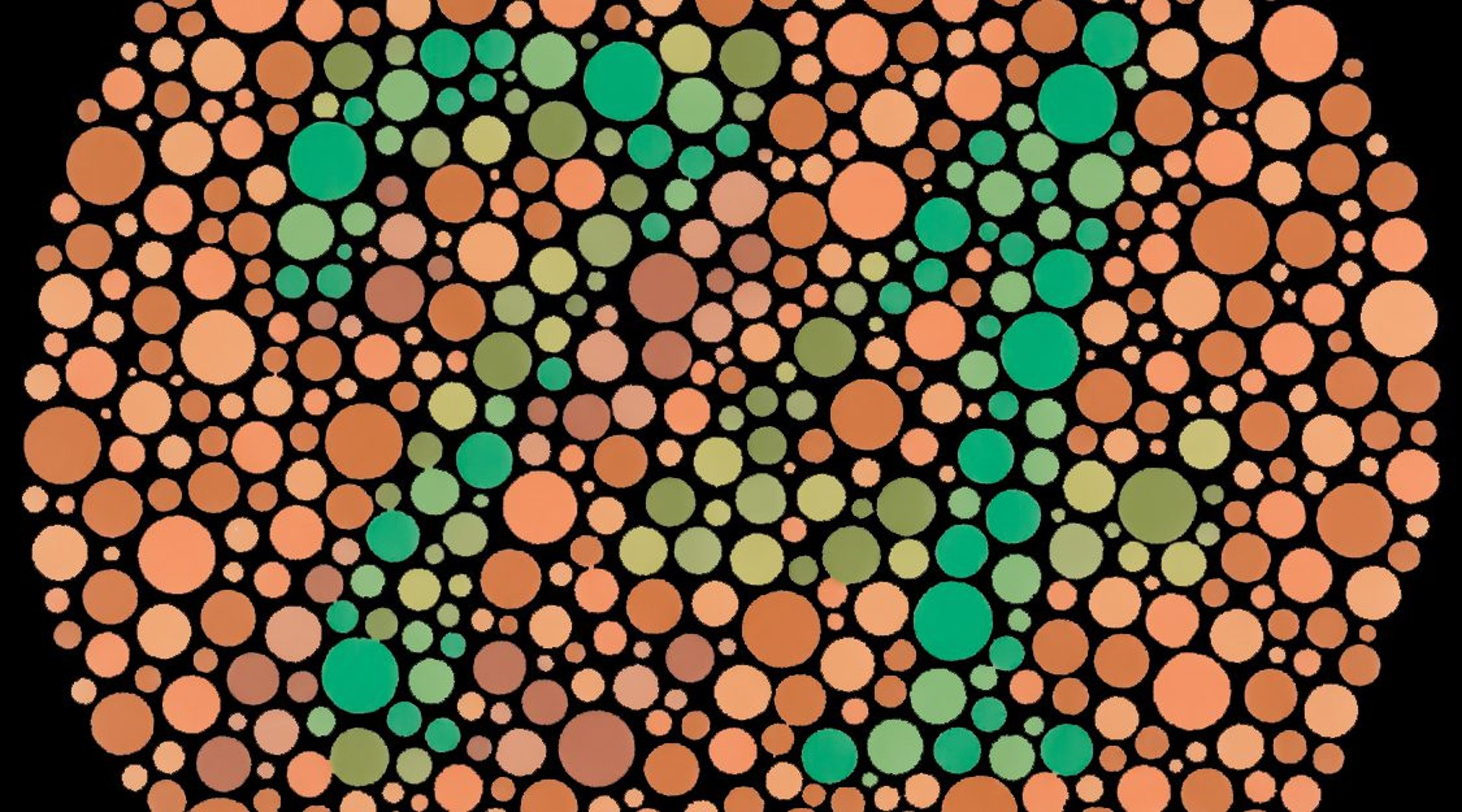
The scientific idea of “attentional landscapes” was proposed
in 1996 to visualize the allocation of visual attention
[1]. In
experiments, the eye movements of participants were recorded while the participants looked at copies of ambiguous paintings by Archimboldo,
Dürer and Escher.
This method of study is based on the way we perceive our
visual environment. Three to four times per second we make very fast eye movements,
and during these ‘saccades’ we are nearly blind. Visual perception
only takes place when our eyes are stable, fixating objects of interest.
Additionally, due to the different density of receptors in the retina
of the eye, each of these fixations resolve only a narrow area of the
visual scene that can be approximated by a Gaussian distribution with
the standard deviation of one degree. In fact, Rembrandt used a similar
highlighting of semantically important
foci long ago.
Thus, by tracking “attentional landscapes”, spatial limits of visual consciousness
are shown in order to explicate a person’s idiosyncratic interpretation
of complex pictures. During the last decade, this basic approach became
a standard in the work on visual perception. The method has also become
of importance for applied areas such as market research and medical imaging.
Overall, this is a striving field of scientific efforts in the European
Union and elsewhere
[2].
The work by Odette England brings the concept
of “attentional landscapes” back to the source – the understanding
of visual art. Using photographic material, she also explores the limits
of perception, but in a novel way that enriches the original approach with
another set of ideas. Those are related to the
Ishihara
plates
developed for testing deficiencies of color vision. Artistic
forerunners here are authors of antique mosaics and French pointillists of
the late 19th Century. Therefore, England simultaneously plays with two
different traditions in the history of art and science, mirroring the limits
of perception.

This integrative approach nicely agrees with the capacities of the human visual
system. In order to understand England’s work, an active process
is necessary: We need to scan the images, fixate the areas of interest
and integrate these pieces of perception with the previously acquired
knowledge.
As with the work of Mark Rothko, in particular his Black-Form
paintings, viewers must comb and scrutinize the work to begin to understand it. This introduces
an element of duration and awareness into the process of perception. In
this way, images become more than patterns on a surface, but, rather,
abstractions of childhood events transformed into a perceptual theory.
The benefits of understanding and enjoying her work are thus only possible
with the investment of quite a lot of activity, and this is also –
although in a relatively unconscious fashion – the only way we are
able to perceive our environment.
— Professor Boris M. Velichkovsky, Dresden University of Technology
References
[1] Velichkovsky B.M., Pomplun M., & Rieser H. (1996). Attention and
communication: Eye-movement-based research paradigms. In W.H. Zangemeister,
H.S. Stiel & C. Freksa (Eds.), Attention and Cognition (pp. 125-154).
Amsterdam: Elsevier.
[2] Velichkovsky B.M., Baccino T., Cornelissen F.W., Geusebroek J.-M.,
Hansen L.K., Hari R., Lorincz A., Pannasch S., & Walter H. (2007-2009).
EU NEST-Pathfinder Project PERCEPT: Perceptual Consciousness – Explication
and Testing (www.nest-percept.eu).