X-Ray Vision vs. Invisibility
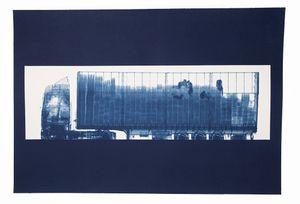
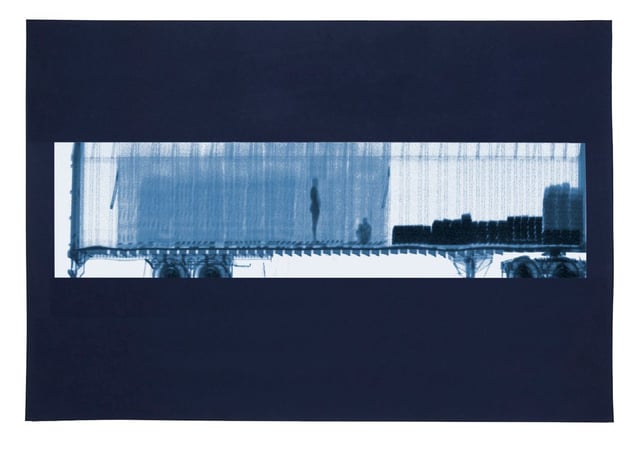
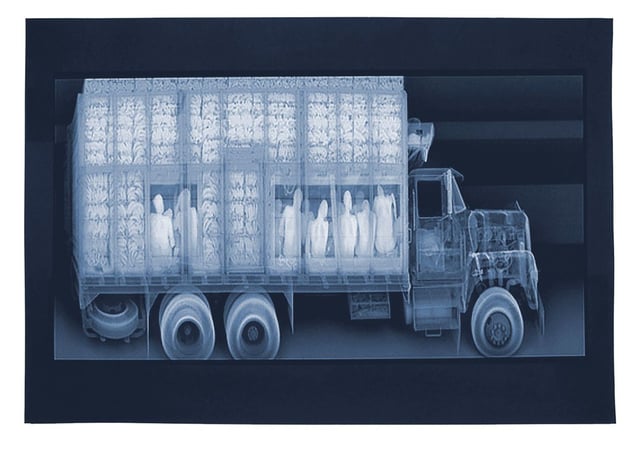
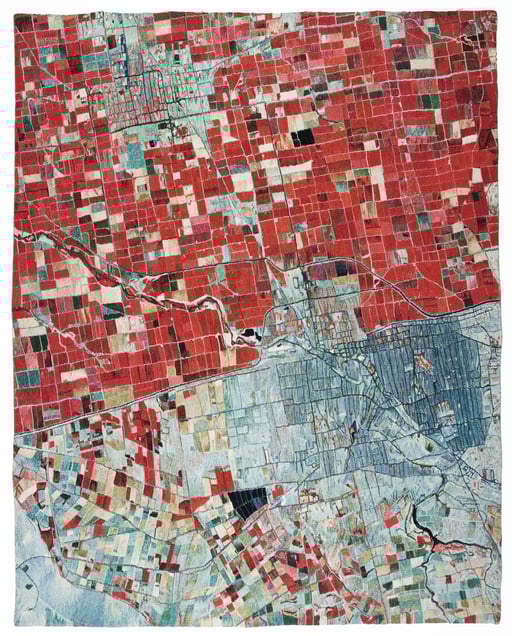
X-Ray Vision vs. Invisibility is a body of work about the phenomenological effects of vision technologies on the perception of undocumented immigrants. This project remediates images of borders into hand-made objects to expose how new vision technologies (backscatter, x-ray, sonic, thermal and digital imaging) recycle Cartesian modes of viewing both land and body and in so doing reinforce neocolonial social and political relationships. X-Ray Vision includes three series of remediated images and a video installation. Examples from two of these series are seen in this application: Ground Control and Backscatter Blueprint. Ground Control is a series of five hand woven wool Gobelin tapestry-rugs that reproduce images of the US/Mexico border at places of conflict taken by the Terra satellite’s Advanced Spaceborne Thermal Emission and Reflection Radiometer (ASTER.) These were each hand woven in Guadalajara by the weavers from the Taller Mexicano de Gobelinos for the amount of money it costs a family of four to cross the US/Mexico border illegally. The remediation from immaterial virtually generated satellite image to tactile hand-woven wool rug challenges the machine vision representation of the US/Mexico border by historicizing the reproducible digital image into a unique object. It also explores the means by which the cartographic form functions to facilitate acts of violence, uphold the assertion of boundaries between cultural and political institutions of power, and reinforce the panopticism of the Enlightenment worldview. Backscatter Blueprint is a series of cyanotypes that reproduce images of trucks taken using a backscatter x-ray machine, tying this new type of digital imaging to the historical processes of image making developed at the beginning of the modern period. The cyanotype process, having been used to reproduce architectural plans resonates with the elevation-like imagery that the backscatter machine produces, images that reveal a jarring tension between the mechanical trucks and their human cargo. The physicalization of these images either through craft or alternative processes calls into question the immediacy in which they are originally produced and consumed, separating them from their screen and giving them body and space to be viewed outside of their original context, of hunter and hunted.
No categories selected
Photos (10)