Consequence: Artefact
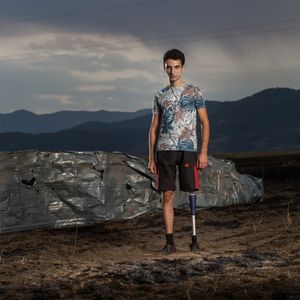
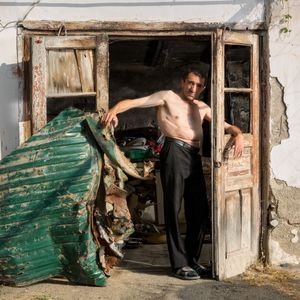
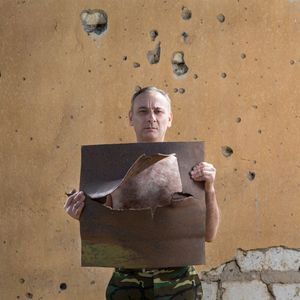
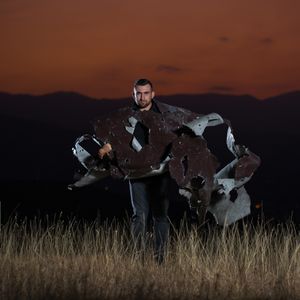
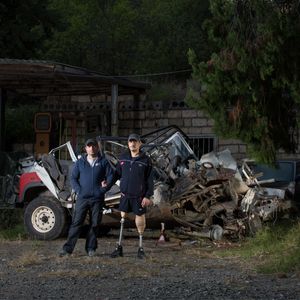
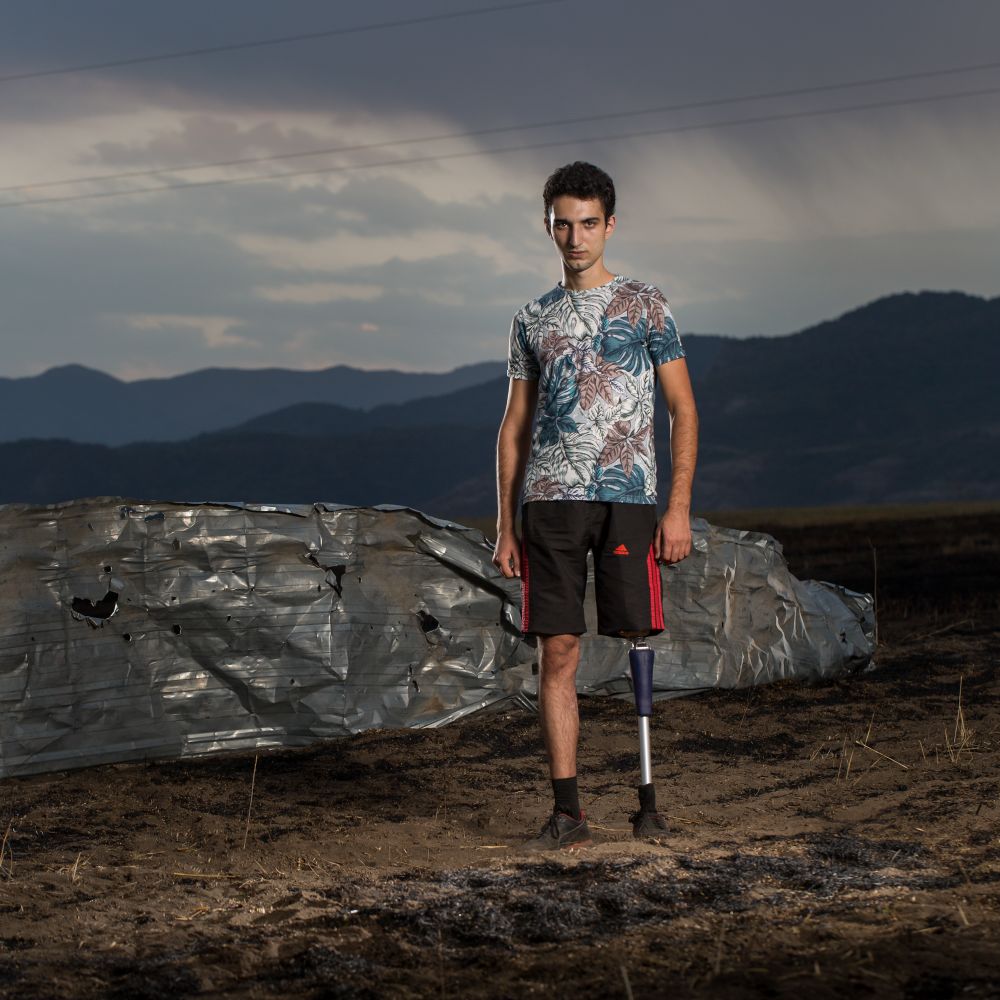
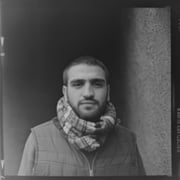
The project aims to offer an alternative discourse where the Nagorno-Karabakh conflict will be considered from a different perspective that reveals not the political, economic or social consequences but the traces of the conflict along the line of contact. The implementers, Edik Boghosian and Areg Balayan, will search for and select material evidences related to the conflict, and transform them into works of art. In one case, they will separate the independent existence of the object from personal stories to produce an installation of material traces of conflict. In other case, they will interweave independent existences of the object and human being to produce a photography series. Also, they will video-record the work in progress, and document the interrelations of people and environment, which will result into a documentary film. The installation will be displayed in Yerevan and Stepanakert, and later become a part of urban culture. The photography and documentary exhibition in Armenia, NK and Georgia will be accompanied by discussions with the audiences around the artefacts, the concept itself, and their possible impacts on conflict. Overall, the project will produce four-five art object installations, a 10 photo stories and a up to 50-minutes documentary film. Additionally, a bilingual (Armenian, English) narrative will be prepared and published online to make the project accessible to foreign audiences. As a result, the project will introduce an artistic platform for a dialogue that will put forward human values as reliable means of mutual understanding and coexistence. This activity takes place within the framework of the “Peacebuilding through Capacity Enhancement and Civic Engagement” programme, funded by the European Union and implemented by Eurasia Partnership Foundation in Armenia (EPF-Armenia), Eurasia Partnership Foundation in Azerbaijan (EPF-Azerbaijan) through Caucasus Research Resource Centre in Georgia (CRRC-Georgia), and International Alert (IA). By Tigran Paskevichyan, author and script writer: "War does not end, so that peace could start. War gets silent, retreats, nestles in the limited vocabulary of politicians, diplomats, mediators and their mediators. War is hiding itself in the absence of those perished and, in often greedy, sometimes selfrecreating stories of those that are accidentally (perhaps accidentally) alive. War does not start with the first shot and does not end with the last one. No one knows whose forefinger released the first bullet not taking into account Serbian terrorist Gavrilo Princip who assassinated Franz Ferdinand of Austria. Growing up there was a hairdresser in our neighborhood, master Suren, a veteran of the Second World War, who was always boasting that he had been the one who fired the last shot in Berlin and that Stalin himself got in touch with him to say. “It’s over Suren, do not fire any more, the war has ended”. From Gavrilo Princip to master Suren, from master Suren to the young sapper who got exploded on a mine in the conflict zone the day before yesterday, war is a wide, inclusive scenery, which has the ability to gradually transform into a landscape. There is no action in the landscape. Landscape is a testimony of peace. The mountain is in its place, the tree is in its place, the grass is green or scorched, the track is narrow and serpentine, the piece of cloud is ready to weep. But try to advance, try to approach the mountain, set your foot on the narrow track, go under the shadow of the tree and the war speaks to you in a inoffensive, unthreatening tone, speaks as one will tell about themselves, in the past tense, but filling the area with their presence. And suddenly your eyes catch a man grazing his sheep behind a tree (you wonder who that might be), then an armored car, lying on the side like a corpse of a horse, you don’t lose sight of a nearby house’s gate covered with machine gun bullet holes either, you can’t overlook a single household detail. Consequence...! Won’t the peace be living its own life, won’t it be appeased by its inner peace, and won’t it be captivated by its own beauty? Is the consequence the impossibility of peace which pushes for riot, vengeance, grief, irreconcilability, revenge and retribution? What to do in this landscape? Where to go? How to hide so that the consequence won’t chase you? Artist Edik Boghosian and photographer Areg Balayan seem to have succeeded in answering these extremely complex questions. As if nothing happened. There are no details on the horizon. What a peace!"
No categories selected
Photos (10)