
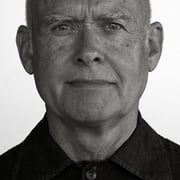
I Must Behave, 2009
.. an excerpt from a review by Deidra Sullivan, curator and lecturer at Wellington Institute of Technology, Wellington, New Zealand. Viewing Bruce Connew’s recent work from his series ‘I Must Behave’ came as somewhat of a surprise. I hadn’t seen his 2007 publication ‘I Saw You’ and consequently the radical departure from his social realist documentary style was unexpected to say the least. I stood in the gallery space and began to piece the work together—wondering about the decision-making process that caused Connew to choose the scenes, people and objects that he did. The title helps: ‘I Must Behave’ suggests self-control and surveillance—an internal dialogue of self-observation. But Connew’s images don’t give themselves away as easily as that. Initially I was left with a creeping sense of unease and dislocation, rather than perceiving any particular message about social control or observation. The images embody a sense of displacement, of disconnection between people (Susan Sontag’s observation about Diane Arbus’ photographs—that “Humanity is not one” springs to mind. v). We see a tire floating in a river. A running cat. Posters of missing children. Decrepit Modernist architecture. A woman’s torso, with a dramatic scar. A duck in a cage. People walking in the street. A boxing match. A forest. A woman holding a banana. Viewing these images is a little like channel surfing. John Berger once commented that a photograph is like a quote, which, removed from its context, becomes ambiguous.vi Connew’s images are just that—dozens of quotes, decontextualised. The images were made in New Zealand and multiple international locations—but more than that, I cannot identify. Sewn back together, these decontextualised quotes tell a new story of dystopia. There is no belonging in these photographs. It is not a reassuring story that Connew is telling us. This is an unsettling observation of the experience of globalisation: where we are, who we are and what we are, we can’t quite say. Perhaps the sense of anxiety and disconnection apparent in these images is also a manifestation of the personal and social controls and restrictions we submit ourselves to. I wonder why Connew has departed from his established social documentary practice so dramatically. Maybe it is a desire to tell a new story, or explore a different set of aesthetic conventions. Perhaps the weight of traditional documentary practice with its irreconcilable ethical and epistemological dilemmas became too heavy. Ironically, I find I must behave more perturbing than a lot of Connew’s socially concerned documentary photography. Yet there’s an absence of human engagement here, present in much of his previous work, that I find myself missing. We are reminded daily of the disconnectedness of contemporary society, and I wonder if ‘I Must Behave’ slips from being a comment on it, into becoming another example of it.
No categories selected
Photos (85)


