
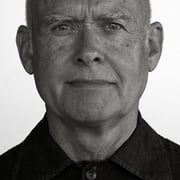
Stopover, 2007
.. an excerpt from the introduction to the book THE AGED PHOTOGRAPH on the preceding page is of two Indian-Fijian men. They are most likely early descendants of indentured Indian immigrants brought to Fiji between 1879 and 1916 to cut sugar cane on unforgiving, five-year contracts; or perhaps one of them is an indentured Indian immigrant, and out of indenture given the likely date of the photograph, holding hands with his son. No one is quite sure. I came across it loose inside the back cover of Aren Kumar’s family photo-album. I hadn’t been looking for photographs from the past. I was after recent snapshots of Aren’s relatives, especially those who had emigrated to such bright lights as Vancouver, Sydney and San Francisco since the coups in Fiji in 1987 and 2000. As I thumbed through the album’s pages, there were plenty of colour prints to choose from, sent home proudly as evidence of settlement from family members now in new countries and placed with care as pictures of aspiration; and not only in Aren’s family album, but also in those of others in the valley. Emigrating was the big thing, and, in and out of earning a small living, still is. I had been staying with Aren’s younger brother Dharmen, a short walk up the dirt road that ran between their tall, abundant sugar cane crops. I had returned six times to Vatiyaka since the 2000 coup, each time lodging in a back room of the home Dharmen shares with his wife Padma and their two young boys, Kushal and Koonal. When I was first introduced to Dharmen in the midst of the coup, he was sirdar of his local sugar cane cutting gang. The gang was made up of men, mostly from his extended family. Like him, they lived, and on the whole still do, near one another on leased 10-acre sugar cane plots in Vatiyaka, a valley in the west of Viti Levu, Fiji’s biggest island. Each sugar cane season, by means of a proper arrangement, the men of the gang harvest one another’s crops. Aren owns the lorry that hauls the cut sugar cane to the mill. At the time George Speight and his co-conspirators embarked upon the 2000 coup, taking hostage the Indian-Fijian prime minister, Mahendra Chaudhry, and elected members of his government, my two elder daughters in New Zealand both had Fijian partners. I hadn’t thought this so extraordinary, but with news of the coup, I began to think: how do I deal with this? One is an Indian-Fijian who arrived in New Zealand with his parents in 1987 after the previous two coups—the Rabuka coups—and the other an indigenous Fijian here on a university scholarship. They were almost as dear to me as my daughters. They got on well, and in fact once lived not far from each other in a middle-class suburb of Suva. But when we sat around the table talking after Speight had stormed parliament, it brought to mind other conversations we’d had. I could remember thinking during some of those conversations that each of them was describing a different Fiji, a different country almost—two countries called Fiji. Bruce Connew
No categories selected
Photos (78)


