FotoFest 2018 Portfolio for Review: Dreams of "Aliens" Among Us...
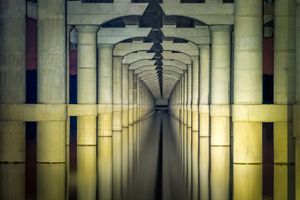
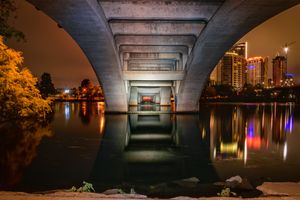
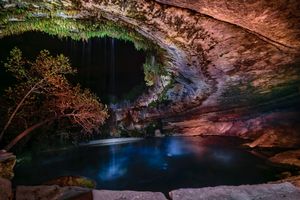
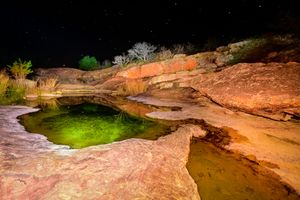
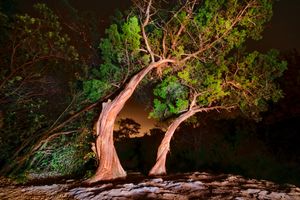
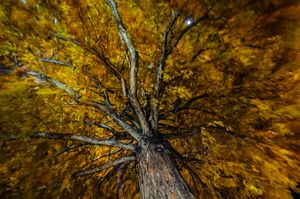
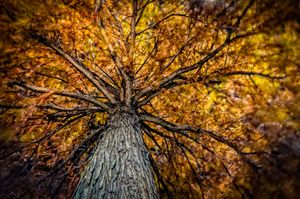
FotoFest 2018 Portfolio for Review: Dreams of "Aliens" Among Us - Subseries Selections from Vibrant Night (Light Painting Landscapes) Intro: [I am posting this version of my 3-2018 portfolio here as a sharable reference for anyone interested. These essentially represent the prints I presented to my reviewers at the Fotofest 2018 Biennial "International Meeting Place" (the place for portfolio reviews of their Registered Artists; www.fotofest2018.art/portfolio-reviews.aspx). Note: I did add one image, "Tinaja, North Rim... "] The prints were selections from my "Vibrant Night (Light Painting Landscapes)" body of work: a look at mainly "nature areas" at night where I "paint" the subjects with light beams during long exposures to create a stylized modification of what was there. That encompassing series is an ongoing project since 2013 and is composed of "subseries," usually based on terrain. [After introducing myself, I explained the above to each reviewer as I handed them my "leave-behinds" (the artist statements included below here and a postcard containing my contact info and 22 carefully sequenced images.) Aiming not to speak more than 5 min, I summarized the most salient points from my artist statements. The points mainly included the following]: 1. The encompassing body of work, "Vibrant Night" is called "vibrant" for two senses of the word: one sense refers to the unusually rich colors of nature's night that I accentuate (eg., by using lights of different color temperatures); the other sense of the word is "alive with vigor and energy" -- again, a distinction from how nature's night is typically depicted by others who favor a naturalistic depiction. And although I am mainly interested in aesthetic experimentation with light painting techniques (my specialty), this latter sense of "vibrant" touches on a conceptual metaphor that often appears in various subseries: that everything -- even the inanimate -- seems alive and striving to exist. (To me, this theme resonates with the notion of an ecocentric Gaian world, where the whole Earth is like a living organism.) 2. The particular subseries within this body of work that provides the most direct visual metaphor for this theme of vibrancy is the one I've chosen as the main focus for this portfolio presentation: Pareidolia: "Alien"-Looking Trees. (Visual pareidolia refers to the illusion of "seeing" a nonexistent object from ambiguous visual cues [eg., seeing faces in clouds.] For more info, see the artist statement in my LensCulture project(s) specifically on pareidolia.) 3. However, as I explained to the reviewer, I wanted to take the rare opportunity to have over 16 eminent reviewers at once critique more parts of my "Vibrant Night" body of work, so I have included some sample prints from several of its other subseries. And to make the presentation more cohesive, I have fashioned a fantasy narrative for this show I call "Dreams of 'Aliens' Among Us." The "aliens," of course, are my pareidolic trees and such. 4. VERY briefly, using the postcard with most of the images, I outlined the dream-like fantasy: Act I provides a lead-in from civilization into increasingly strange territory where, in Act II, we meet our "alien" tree characters (who themselves generally appear progressively stranger). At end of Act II, a disrespectful / invasive action by an alien tree ["implantation"] enrages a mountain god of Earth. As a result, a conflict ensues in Act III which causes the alien trees to head back to the stars and arrive at their home planet, a desolate place. 5. I emphasized that this story was mainly a presentation device [although some may find it an allegory for environmental concerns over invasive species] and that my aims for all the subseries (thus far) of this body of work were mainly aesthetic. My greatest pleasure from this whole body of work is either to add freshness to a much photographed or iconic scene -- or, even better, to reveal the hidden beauty of an prosaic scene that would otherwise go unappreciated. To current viewers: I suggest the best way to enjoy this show is not to look at my titles once you reach the pareidolic items; rather, see if you can exercise your own perceptual imaginative capacities to discern what YOU might find pareidolic about them. Only then, check the titles. OR, if you are one who finds the idea of alien creatures off-putting, don't look at the titles at all! For an extra challenge to your imagination, create your own story. Here, for example, is an alternate story that occurred to me: "Night Trip Thru the Wild to a Zoo for Abstract Animals." [If you want additional details, I include the artist statements I handed the reviewers. (But my summary of what I verbally told them as represented above should be enough for most]: Show for FotoFest 2018 Meeting Place: Dreams of "Aliens" Among Us: A Fantasy Narrative Composed of Selections from the Series Vibrant Night (Light Painting Landscapes) Featuring the Subseries, Pareidolia: Alien-Looking Trees... This selects from my ongoing body-of-work/series, “Vibrant Night: Light Painting Landscapes” which focuses on the American Southwest, particularly Texas. I consider “Vibrant Night” to be a lifelong project that includes “subseries” of specific terrains and even more specific “studies” within or across them.) I also re-purpose some of the photos (as I do here) to tell visual stories, or to lead the viewer on trips ( “a strange, long night’s journey into the day”) where I hunt for striking images which impact my frame of mind as I wander nature areas and their surroundings in the dark. Or ordinary views which I can transform into something strange, beautiful, and evocative. My main goal is aesthetic experimentation as I explore the perspective that light painting can provide, usually by stylizing or transforming what I see. This current project leads the viewer deeper into the wilderness night to tell a strange, dream-like fantasy. It was inspired by one study (now a major subseries) I call "Pareidolia: Alien-Looking Trees... This explores the illusion of how some objects (trees in this case) lend themselves to be imagined as things that really aren’t there: That’s what “pareidolia” means, and we are all familiar with it when, for example, we see figures and faces in clouds. The story is more analogous to a tone poem or mood piece. I think it is one of those things where it’s best not to explain too much. Yet, drawing from my screenwriting background, it does have a structure: the opening shots take us from civilization into an increasingly strange, mysterious wilderness as a middle section where we meet the “alien” trees. In the current version, there is a conflict at the end of Act II where the pictures imply a crisis between the tree "aliens" and a mountain god of Earth (himself, pareidolic.). As a result, we see an alien lady tree gazing up into the stars, perhaps sick of the conflict, dreaming about her original home. And as the fantasy concludes we see instances of them crawling toward the stars and launching into them! The epilogue picture implies that in the distant future they arrive back at their home planet. It’s that kind of thing. Dream logic. Or whatever you make of it. Pareidolia is surreal by its nature. See what you might see. Make it your own dream. (In fact, I think this show would be more stimulating to viewers (who have time to linger) if they go into it simply knowing that the artist saw pareidolic illusions in all of these trees/plants and see what they see themselves (and only then check the individual titles). And perhaps they can come up with their own story. Ending on a rational note, there is a scientifically credible hypothesis that life may have been seeded on Earth from other planets (the panspermia hypothesis.) So, we might all be aliens on Mother Nature’s planet. [Note, on a second page I included a more general statement on the aims for the encompassing series, "Vibrant Night"]: Statement on Vibrant Night (Light Painting Landscapes) I have specialized in landscape light painting photography for the last half decade. My primary focus has been on nature areas of the American Southwest, mainly Texas. (It includes structures in or by them such as bridges and roads.) This has formed a substantial series/body-of-work which I call "Vibrant Night," both for its uncommon stylistic approach to nature's night (which I typically portray as richly colored rather than in muted tones) -- and also for the other meaning of "vibrant" which is alive with vigor and energy. (As a lifelong night person, this reflects how I see the night in nature: note just a place of mystery, but at times a place of Nature's magnificence, power, and energy -- where everything seems alive and striving.) But my main objective is aesthetic: to study and develop how techniques of light painting can enhance my subjects. To that end, I usually try to stylistically depict a subtle visual fantasia: a bit hyperreal, but not too far from what was there. I do this by using lights of different color temperatures on different parts of the scene, and increasingly by using lights "theatrically," selectively embracing the darkness as well as the light. My immediate goal is to continue to add and grow subseries which allow me to coherently explore different types of terrain and subjects encompassed by my Vibrant Night series/body-of-work. My greatest pleasure from this work is either to add freshness to a much photographed or icon scene -- or to reveal the hidden beauty of an "ordinary" scene that would otherwise go unappreciated. Metaphorically, my work reminds me that everything -- including people -- can seem different if seen in a different light. -- If you are interested in the full artist statements on the subseries or their encompassing body-of-work, Vibrant Night, see my portfolio site on LensCulture.
No categories selected
Photos (30)